Biryani Smell: Why It’s the Heart of the Dish and How to Get It Right
When you walk into a kitchen where biryani smell, the deep, layered fragrance of spiced rice, meat, and herbs rising from a pot fills the air, you don’t just smell food—you feel it. That smell isn’t accidental. It’s the result of decades of technique, the right spices in the right order, and patience you can’t rush. It’s what turns a simple rice dish into something people remember for years. This isn’t just about cooking—it’s about creating an experience that starts before the first bite.
The biryani spices, a blend of cardamom, cloves, cinnamon, bay leaves, and saffron are the silent architects of that smell. Each one releases its oils at different temperatures and times. Toasting whole spices before grinding them? That’s the first secret. Soaking saffron in warm milk? That’s the second. And letting the rice steam slowly in a sealed pot? That’s the third. You can’t fake it with extra cumin or a splash of food coloring. The aromatic rice, long-grain basmati soaked, parboiled, and layered with marinated meat has to absorb every bit of that fragrance. If the rice is too wet, it turns mushy and the smell gets drowned. Too dry, and the spices never bloom. It’s a balance only practice teaches.
Regional styles all have their own twist—Hyderabadi biryani leans heavy on fried onions and rose water, Lucknowi uses subtle saffron and kewra, while Kolkata adds boiled eggs and potatoes. But they all share one thing: the smell hits you before you even lift the lid. That’s why you’ll find people waiting outside the kitchen, not just for the food, but for that moment when the steam escapes and the scent rolls out like a wave. It’s the same reason why your biryani might taste fine but still feel off—because the smell didn’t come through. No amount of garnish or presentation fixes that.
You’ll find posts here that show you exactly how long to bake biryani so the rice stays fluffy but still drinks in the spices. Others break down why potatoes are in some versions—not just for bulk, but because they help trap steam and deepen the aroma. There’s even one that explains why mint and cilantro aren’t just decoration—they’re aroma boosters that lift the whole dish. None of these posts are about guessing. They’re about fixing what went wrong. If your biryani smells flat, you’re not bad at cooking. You just missed one step. We’ll show you which one.
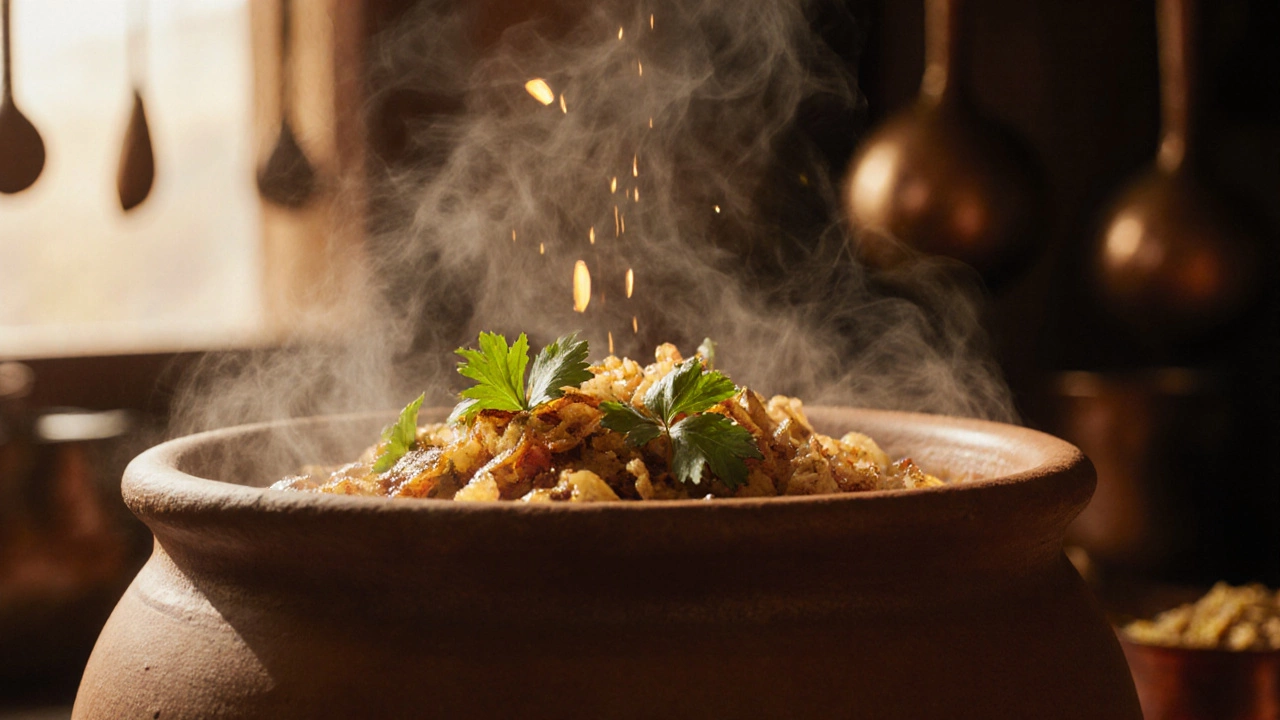
What Is the Secret Smell of Biryani? The Real Aromas Behind the Dish
The secret smell of biryani comes from layered spices, slow cooking, and hidden ingredients like kewra water and saffron-not just curry powder. Learn what makes it unforgettable.