Aromatic Spices: The Heart of Indian Cooking and How They Transform Every Dish
When you think of Indian food, what comes to mind? It’s not just heat—it’s the aromatic spices, a complex blend of earthy, floral, and warm notes that define the flavor profile of Indian cuisine. Also known as whole spices, these aren’t just seasonings—they’re the foundation of every great dish, from a simple dal to a grand biryani. You don’t add them to food. You build the food around them.
Take saffron, the world’s most expensive spice, made from hand-picked crocus stigmas. Also known as red gold, it’s what gives biryani its golden hue and that deep, honeyed fragrance you can’t replicate with anything else. Then there’s cardamom, a spice that smells like citrus and smoke, used in both sweet and savory dishes across India. Also known as elaichi, it’s the secret whisper in your masala chai and the quiet hero in your lamb curry. And let’s not forget cumin, the grounding, nutty backbone of most Indian spice blends. Also known as jeera, it’s toasted in oil to unlock its full flavor—something you can’t skip if you want your food to taste like it came from a home kitchen in Lucknow or Chennai. These aren’t random ingredients. They’re a language. Each one has a role. Together, they create layers that stay with you long after the meal ends.
What makes aromatic spices so powerful isn’t just what they are—it’s how they’re used. Slow roasting. Blooming in hot oil. Layering at different stages of cooking. That’s why your biryani smells like heaven after 25 minutes in the oven, and why your roti won’t puff if you skip the right spice mix. It’s not magic. It’s technique. And every post in this collection shows you exactly how it’s done—from the green garnish of mint and cilantro that finishes a dish, to the hidden kewra water that makes biryani unforgettable, to why a pinch of saffron costs more than your grocery bill for the week.
You’ll find out why some spices are worth the price, how to tell if your cumin is stale, and why lemon juice turns milk into paneer. You’ll learn what makes tandoori chicken red, why potatoes show up in biryani, and how to fix flat roti with the right spice balance. This isn’t a list of recipes. It’s a guide to understanding the spices that make Indian food work—so you don’t just cook, you cook with confidence.
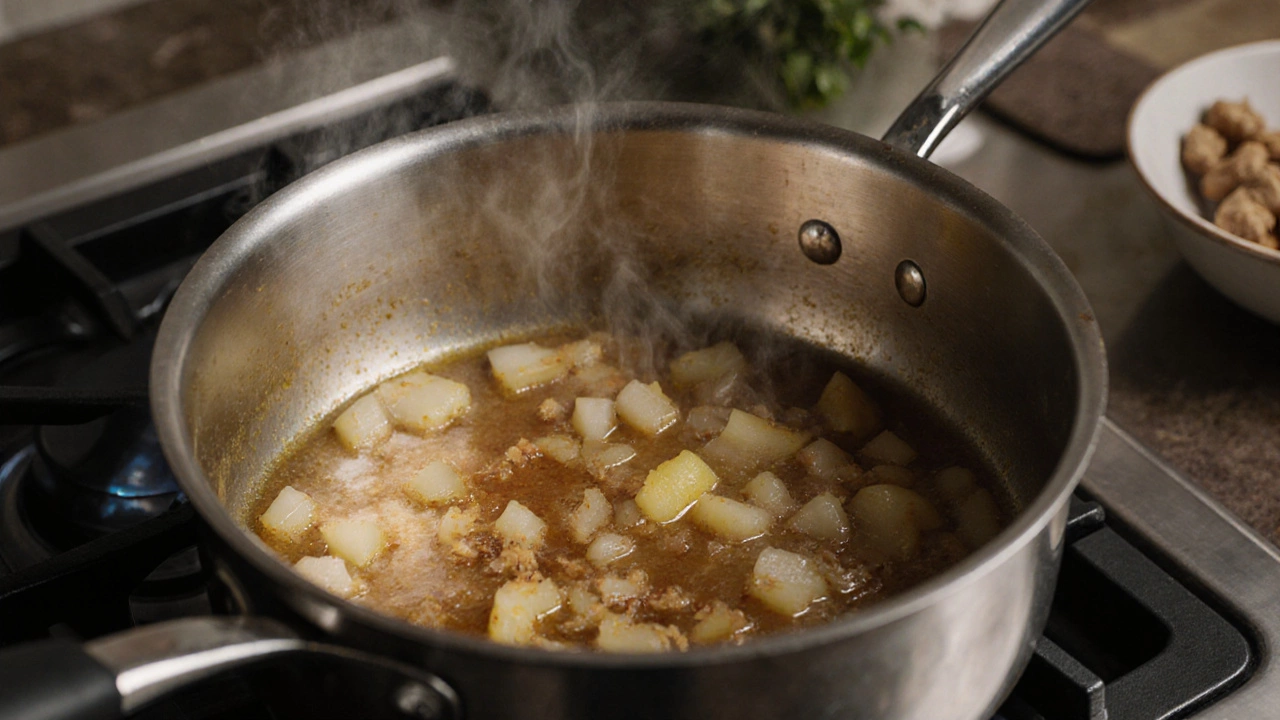
How to Add Depth to Chicken Curry - Essential Tips & Techniques
Learn how to add real depth to chicken curry with aromatic spices, umami boosters, acids, and technique tips for a restaurant‑level flavor.