
Naan vs Rice Nutrition Calculator
How This Calculator Works
Calculate calories and nutrients for different portions of naan and rice. The article explains that neither is "bad"—it's about portion size and what you pair it with. This tool helps you make informed choices.
Nutrition Results
| Calories | 0 |
|---|---|
| Carbohydrates | 0g |
| Protein | 0g |
| Fat | 0g |
Comparison: This portion of naan has more calories than rice.
How This Compares to the Article
The article explains that naan is rice higher in calories and fat due to yogurt and ghee, while rice is easier to digest. The calculator shows you exactly how much more you're consuming based on your choices.
Pro Tip: According to the article, one small piece of naan with a vegetable curry is a balanced meal. But two pieces with a creamy korma can easily hit 600-700 calories.
Portion Control Matters: Remember, the size of a restaurant naan is often twice that of a home-made one. Try measuring your portions to match the article's recommendations. A standard serving is 1 piece of naan or 1 cup of rice.
When you’re sitting down to a plate of curry, the big question isn’t just which spice to reach for-it’s whether to grab a piece of naan or scoop up some rice. Both are staples in Indian kitchens, but they’re not the same. One’s soft, chewy, and buttery. The other’s light, fluffy, and neutral. So which one is actually better for you? It’s not about picking a winner. It’s about understanding what each one does for your body-and how to use them wisely.
What’s in naan, really?
Naan isn’t just flour and water. Traditional naan uses white flour, yeast, yogurt, milk, and sometimes ghee or butter. That means it’s higher in fat and calories than plain rice. A single medium naan (about 150 grams) packs around 250-300 calories, with 8-12 grams of fat and 45-55 grams of carbs. The yogurt and milk add a bit of protein-around 8-10 grams-but it’s still mostly refined carbs.
Because it’s baked in a tandoor or on a hot skillet, naan gets a slightly crisp edge and a soft, pillowy center. That texture makes it great for scooping up thick curries. But the same qualities that make it delicious also make it dense. If you eat two naans with a heavy butter chicken curry, you’re easily hitting 600-700 calories before even adding a side of raita.
What’s in rice, really?
White rice is simpler: just milled grains, water, and heat. A cup of cooked white rice (about 195 grams) has around 200-220 calories, less than 1 gram of fat, and 45 grams of carbs. It’s low in protein-only 4-5 grams per cup-and almost no fiber unless it’s brown or parboiled.
But here’s the catch: rice doesn’t come in one form. Brown rice has the bran and germ intact, so it brings 3.5 grams of fiber and 5 grams of protein per cup. It also has more magnesium, B vitamins, and antioxidants. Basmati rice, especially aged basmati, has a lower glycemic index than regular white rice, meaning it won’t spike your blood sugar as fast. That’s important if you’re watching energy levels or managing insulin.
Which one digests easier?
People often think naan is harder to digest because it’s bread. But that’s not always true. The yogurt and fermentation in naan actually help break down gluten and make it gentler on the stomach for some people. That’s why many with mild gluten sensitivity find naan easier to handle than Western-style white bread.
Rice, especially white rice, is one of the easiest carbs to digest. It’s often the first food doctors recommend after stomach bugs or surgery. That’s because it’s low in fiber, low in fat, and mostly made of simple starches that the body breaks down quickly. If you’re feeling bloated or have IBS, rice is usually the safer bet.
But if you’re eating naan made with whole wheat or multigrain flour, that changes things. Whole wheat naan has more fiber and takes longer to digest-which is good for steady energy but not great if your gut is sensitive.
Energy and blood sugar: what happens after you eat?
Naan made with white flour has a high glycemic index-around 70-75. That means your blood sugar rises quickly after eating it. If you’re active, that’s fine. You burn it off. But if you’re sitting at a desk all day, that spike can lead to a crash an hour later, leaving you sluggish and craving more carbs.
White rice isn’t much better. It’s also around 70-75 on the glycemic scale. But basmati rice? That’s closer to 50-58. Brown rice? Around 50. So if you’re choosing rice, go for basmati or brown. It makes a real difference in how you feel after meals.
Naan can be improved too. Adding whole wheat flour, oats, or flaxseed to the dough lowers the glycemic load. Some home cooks in Delhi and Mumbai are already doing this-mixing 30% whole wheat into their naan. The result? A bread that’s still soft but keeps energy steady longer.
Portion control matters more than you think
Here’s the truth: neither naan nor rice is “bad.” It’s how much you eat and what you eat it with.
One piece of naan with a side of dal and vegetables? That’s a balanced meal. Two pieces with a creamy korma and a mango lassi? That’s a calorie bomb.
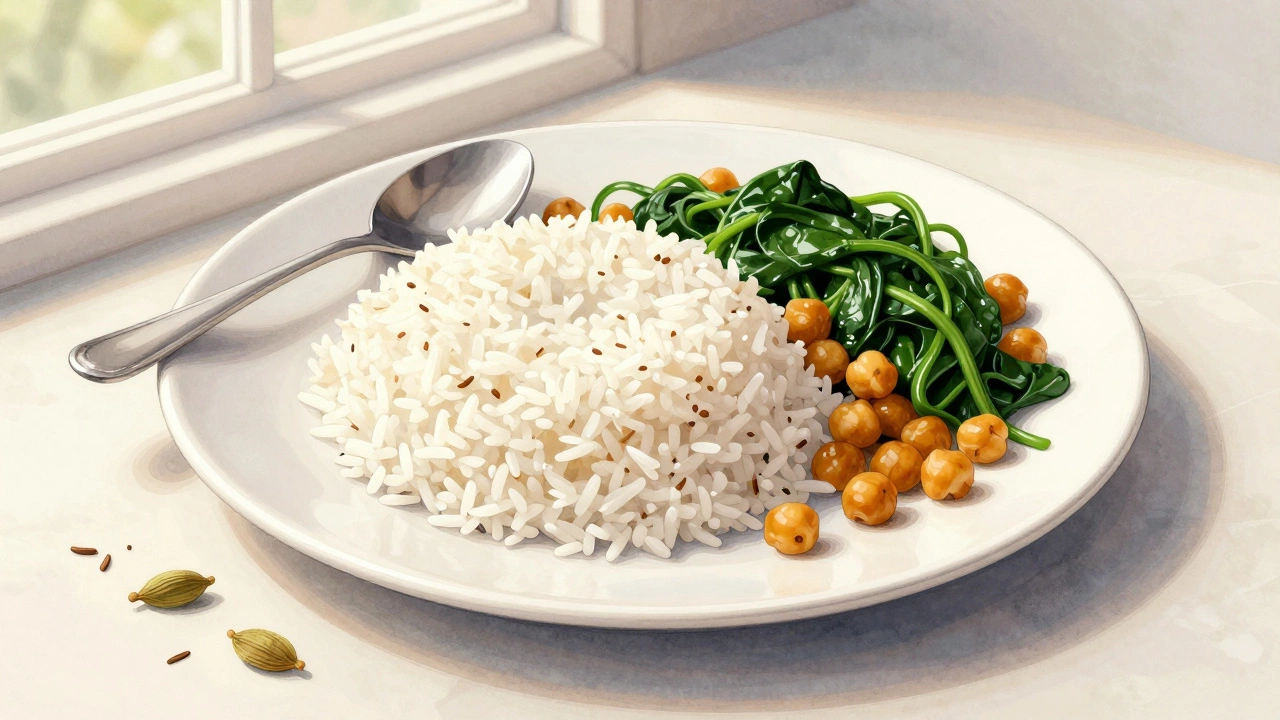
Same with rice. One cup of basmati rice with chickpea curry and spinach? Nutrient-dense and filling. Three cups with ghee drizzled on top and a side of fried papad? You’re eating more than you need.
Most people don’t measure. They just grab. A restaurant naan is often twice the size of a home-made one. A scoop of rice at a buffet can easily be a full cup-double the standard serving. That’s where the problem starts.
Which one keeps you full longer?
Naan has more fat and protein than rice, so it *should* keep you fuller longer. And for some people, it does. The chewiness slows down eating, which gives your brain time to register fullness.
But rice, especially brown or basmati, has more volume for fewer calories. A cup of rice takes up more space in your stomach than a piece of naan. That physical fullness triggers satiety signals too.
Studies show that people who eat rice as a main carb tend to consume fewer total calories over the day than those who rely on bread. Why? Because rice doesn’t come with the same buttery, salty, or sugary add-ons that naan often does. You don’t typically spread ghee on rice. You might on naan.

What’s best for weight management?
If your goal is to lose or maintain weight, rice has a slight edge-if you choose the right kind. Brown rice and basmati rice are lower in calories per gram than naan. They also have more fiber and nutrients that support metabolism.
But if you’re active-running, lifting, hiking-you might need the extra calories from naan. Athletes in Punjab and Haryana often eat naan with milk and eggs for breakfast. It’s calorie-dense, easy to digest, and gives quick energy before training.
For most people, though, rice is the smarter daily choice. It’s easier to control portions, it’s less likely to be loaded with added fats, and it pairs well with vegetables and legumes.
What about cultural habits?
In North India, naan is king. In South India, rice rules. That’s not random. Climate, agriculture, and history shaped this. The north grows wheat; the south grows rice. People adapted.
But today, it’s not about region-it’s about your body. If you grew up eating naan every day and feel fine, keep doing it. If you’ve noticed bloating, energy crashes, or weight gain after meals with naan, try swapping one meal a week for rice. See how you feel.
There’s no rule that says you have to choose one forever. Many families in Delhi and Bangalore mix both: rice for lunch, naan for dinner. Or rice with dal on weekdays, naan on weekends.
Practical tips for everyday eating
- For weight control: Stick to one small piece of naan or one cup of basmati rice per meal. Skip the extra ghee.
- For digestion: Choose white rice if your stomach is upset. Try whole wheat naan if you want more fiber.
- For energy: Athletes or laborers can use naan for quick fuel. Others should lean on rice for steady energy.
- For flavor: Use naan to soak up thick, saucy curries. Use rice to balance spicy or oily dishes.
- For leftovers: Leftover rice? Make fried rice or khichdi. Leftover naan? Toast it with a little oil and garlic for a snack.
The real secret? Don’t think of naan and rice as rivals. Think of them as tools. One’s for when you want richness and texture. The other’s for when you want lightness and balance. Use them both-just use them wisely.
Is naan healthier than white rice?
Neither is clearly healthier. Naan has more protein and fat due to yogurt and ghee, but it’s also higher in calories and often made with refined flour. White rice is lower in fat and easier to digest, but it’s mostly simple carbs with little fiber. If you’re choosing between them, basmati or brown rice usually has the edge for long-term health.
Can I eat naan if I’m trying to lose weight?
Yes, but in moderation. One small piece (not the giant restaurant version) with a veggie-heavy curry can fit into a weight-loss plan. Skip the butter or oil on top. Pair it with lentils and salad to balance the meal. Eating naan daily, especially with creamy sauces, will likely slow progress.
Does rice make you gain weight?
Rice itself doesn’t make you gain weight. Eating too much of any carb, especially with fatty curries or sugary sides, can. Portion size matters more than the food itself. One cup of brown basmati rice is a healthy serving. Three cups with ghee and fried snacks? That’s a recipe for weight gain.
Which is better for diabetics: naan or rice?
Neither white naan nor white rice is ideal for diabetics. But brown rice and basmati rice have a lower glycemic index than most naan. Whole wheat naan is a better option than regular naan, but still higher in carbs than brown rice. The best choice is small portions of basmati rice with protein and fiber-rich sides like dal and spinach.
Can I substitute rice for naan in every meal?
You can, but you might miss out on texture and flavor variety. Naan adds richness and helps scoop up thick curries. Rice gives you a neutral base that lets spices shine. Mixing both keeps meals interesting and nutritionally balanced. There’s no need to pick one forever.
If you’re eating Indian food regularly, the goal isn’t to eliminate naan or rice. It’s to understand how each one fits into your life. Use naan for special meals or when you want comfort. Use rice for everyday balance. Listen to your body. And don’t let tradition pressure you into eating more than you need.