Milk Acid Reaction: How Acid Turns Milk into Paneer and Other Indian Kitchen Secrets
When you add lemon juice or vinegar to milk and it turns lumpy, that’s the milk acid reaction, the chemical process where acid causes milk proteins to coagulate and separate from the liquid whey. Also known as curdling, it’s not a mistake—it’s the foundation of paneer, cottage cheese, and dozens of traditional Indian foods. This isn’t science class trivia. It’s how your grandmother made fresh cheese without a single piece of equipment, using nothing but milk, heat, and a splash of lemon.
The paneer, a fresh, non-melting Indian cheese made by curdling milk with acid you put in your butter chicken or saag paneer doesn’t come from a store. It’s made right in your kitchen by heating milk to just below boiling, then stirring in acid—lemon juice, vinegar, yogurt, or even buttermilk. The milk separates into solid curds and liquid whey. Drain the whey, press the curds, and you’ve got paneer. No rennet. No fancy tools. Just heat, acid, and patience. This same reaction works with goat milk, cow milk, even buffalo milk—each giving a slightly different texture. But if your milk doesn’t curdle? It’s not the acid. It’s usually the milk. Ultra-pasteurized milk often won’t curdle because the proteins have been damaged by high heat during processing. Always use regular pasteurized milk for best results.
Acid doesn’t just make cheese. It’s the secret behind many Indian dishes. A splash of yogurt in a curry adds tang and tenderizes meat. A squeeze of lime in dal brightens the whole bowl. Even in pickles, acid preserves and transforms flavor. The milk acid reaction, the same process that turns milk into paneer, is why you can’t substitute store-bought cheese for paneer in most recipes—most cheeses melt. Paneer holds its shape because the acid sets the proteins into a firm, non-melting structure. That’s why halloumi or queso blanco work as substitutes—they’re also acid-set cheeses. But cheddar? Mozzarella? They’ll turn to soup in your curry.
And here’s something most people miss: the whey. Don’t throw it out. It’s packed with protein and minerals. Use it to soak rice for fluffier biryani, mix it into dough for softer rotis, or even drink it plain with a pinch of salt. In rural India, whey is often used to water plants or feed livestock. It’s not waste—it’s a resource. The milk acid reaction isn’t just about making cheese. It’s about using every part, wasting nothing, and understanding how simple chemistry shapes your food.
Below, you’ll find real recipes and fixes from home cooks who’ve been there—flat rotis, failed paneer batches, confused substitutions. Whether you’re trying to make paneer for the first time or wondering why your milk didn’t curdle, the answers are here. No fluff. No theory. Just what works.
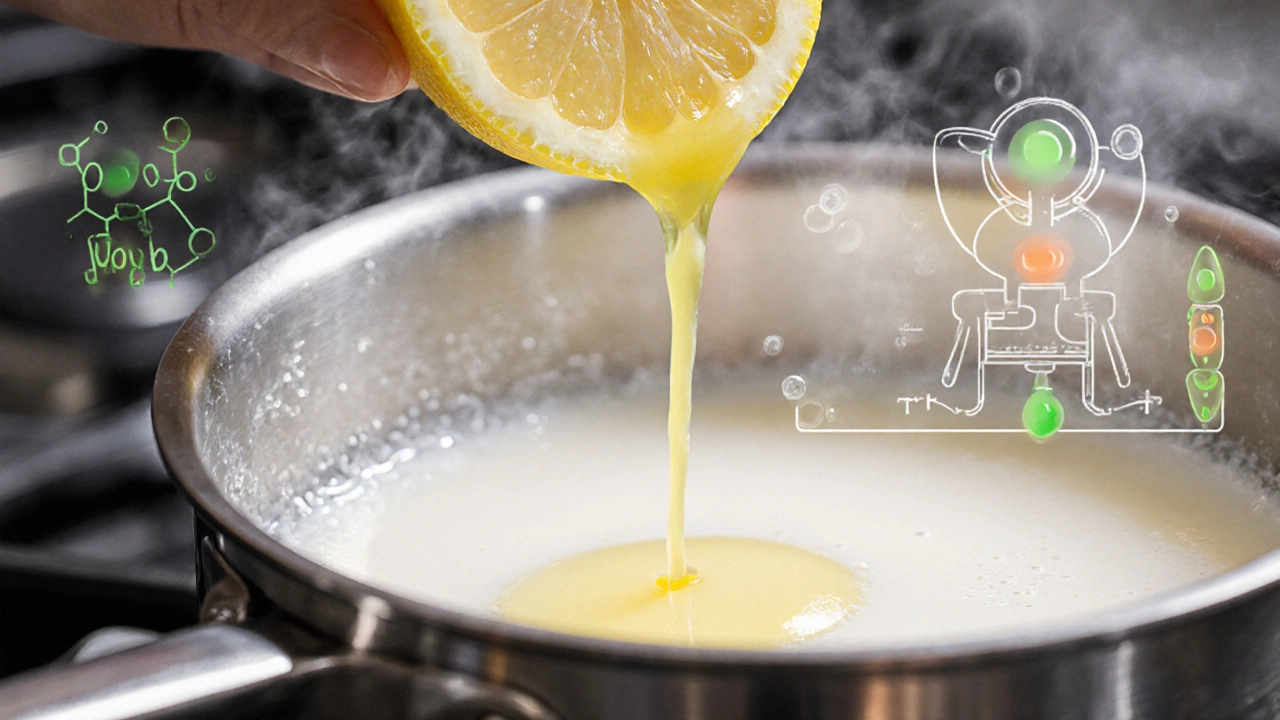
Why Lemon Juice Curds Milk: The Science Behind Homemade Paneer
Learn why lemon juice makes milk curdle, the science behind paneer, step‑by‑step instructions, common pitfalls, and FAQs for perfect homemade cheese.