Lemon Juice Milk Curdle: Why It Happens and How to Use It in Indian Cooking
When you add lemon juice, a natural acid used in Indian kitchens to tenderize, preserve, and transform dairy to warm milk, something magical happens—the milk curdles, the process where proteins in milk clump together under acidic conditions. It’s not a mistake. It’s not spoiled milk. It’s the very foundation of homemade paneer, a fresh, non-melting Indian cheese made by curdling milk with acid. This simple reaction—acid meeting heat and protein—is how you turn plain milk into a solid, sliceable, curry-friendly block of protein-rich cheese. And yes, it’s used in more than just paneer.
Why does lemon juice do this? Milk contains casein proteins that float around happily until acid lowers the pH. At around 5.5 pH, those proteins lose their charge and start sticking together, forming curds. The liquid left behind? Whey. That’s it. No chemicals, no rennet, no fancy equipment. Just lemon juice, milk, and heat. This is why so many Indian recipes call for lemon juice instead of vinegar or yogurt—it’s fast, clean, and adds a bright, citrusy note that lingers subtly in the final dish. You’ll find this trick in everything from lemon juice milk curdle recipes for paneer to creamy kheer where a touch of lemon balances sweetness. It’s also why some people accidentally curdle milk when adding lemon to tea or soup—temperature and timing matter. Warm milk (not boiling) with a squeeze of lemon? Perfect curd. Cold milk with lemon? Nothing happens. Boiling milk with too much lemon? Tough, grainy curds.
But here’s what most people don’t realize: controlling this curdle is a skill. Too little lemon, and your paneer won’t set. Too much, and it turns rubbery. The best home cooks add lemon juice slowly, stirring gently, watching for the exact moment the milk separates cleanly into white curds and clear whey. Then they strain it through a cloth, press it lightly, and get that perfect block. This same principle applies to making yogurt-based sauces, where curdling is the enemy—so you temper the yogurt with warm water before adding it to hot curry. It’s all about managing acid, heat, and timing. In the posts below, you’ll find real recipes where lemon juice milk curdle isn’t just a step—it’s the star. From how to make paneer without a recipe to why some biryanis use a splash of lemon to cut richness, you’ll see how this basic reaction shapes flavor, texture, and tradition across India. No fluff. No theory. Just what works in your kitchen, right now.
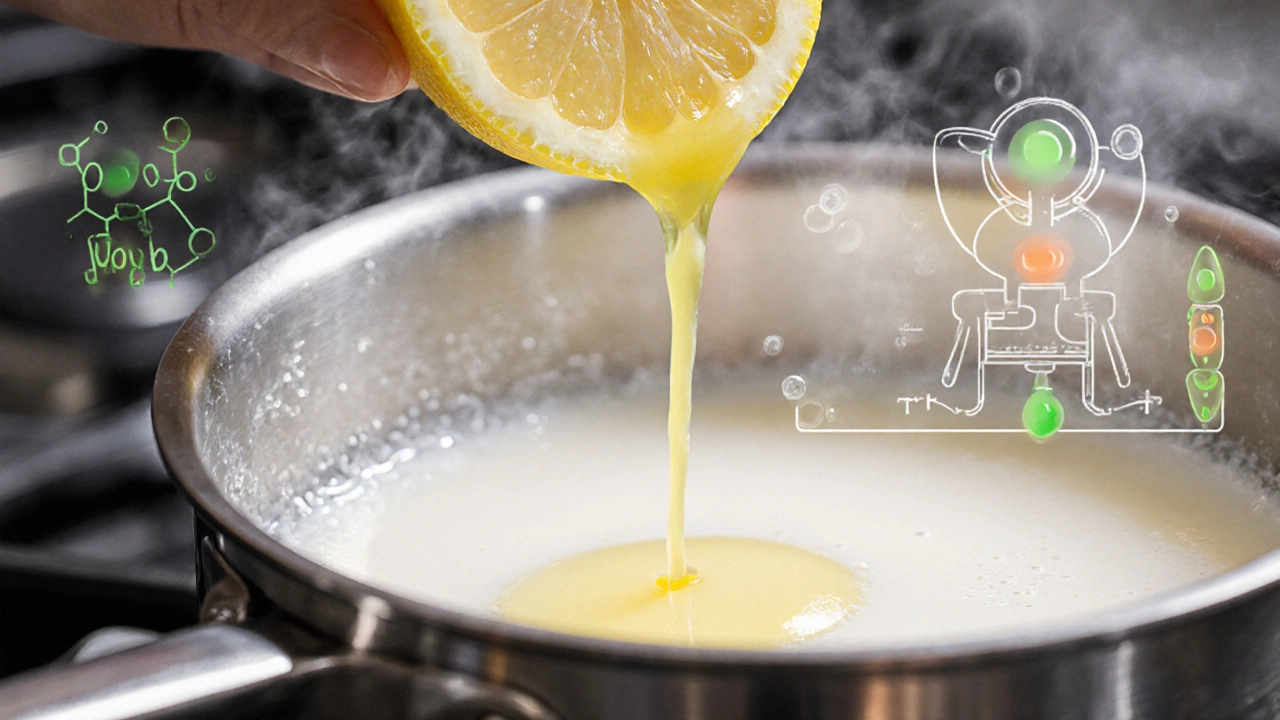
Why Lemon Juice Curds Milk: The Science Behind Homemade Paneer
Learn why lemon juice makes milk curdle, the science behind paneer, step‑by‑step instructions, common pitfalls, and FAQs for perfect homemade cheese.