Indian Staples: The Core Foods That Define Indian Cuisine
When you think of Indian food, you might picture spicy curries or rich desserts—but what holds it all together are the Indian staples, the everyday foods that form the backbone of meals across India. These aren’t fancy dishes you only eat on holidays. They’re the roti you tear by hand, the rice you scoop up with your fingers, the paneer you fry until golden, and the chutney that cuts through the richness of every bite. Without these staples, Indian meals wouldn’t just taste different—they wouldn’t even feel like Indian food.
Take roti, a simple, unleavened flatbread made from whole wheat flour and water. It’s not just bread—it’s a utensil, a vessel, a comfort. When your roti doesn’t puff up, it’s not a failed recipe—it’s a sign you need to adjust your heat or kneading. Paneer, a fresh, non-melting cheese made by curdling milk with lemon juice or vinegar, is another cornerstone. It’s the protein in your kadai, the star of your palak paneer, and the only cheese that holds its shape in a hot curry. You won’t find it in a grocery aisle in most countries, but in Indian homes, it’s made weekly, often from scratch. Then there’s chutney, a tangy, spicy condiment that balances flavors and wakes up any dish. It’s not a side—it’s a necessity. Whether it’s mint-cilantro, tamarind, or mango, chutney turns a simple plate of rice and dal into something alive. And let’s not forget biryani, a layered rice dish where spices, meat, and aromatics are slow-steamed to perfection. It’s not just a meal; it’s a ritual. The way it smells—thanks to saffron, kewra water, and slow cooking—is what makes people wait hours for it. These aren’t random ingredients. They’re the pillars.
What ties them all together? Simplicity, regionality, and function. A South Indian breakfast of idli and sambar isn’t just about taste—it’s about fermentation, balance, and digestibility. A North Indian meal with paratha and yogurt isn’t just filling—it’s designed to handle heavy spices and long days. These staples aren’t imported. They’re grown, ground, curdled, and cooked with generations of know-how. You won’t find them in a food pyramid, but you’ll find them in every Indian kitchen, every morning, every night.
Below, you’ll find real answers to real problems: why your roti stays flat, what to use when you run out of chutney, how to make paneer without buying it, and why biryani needs exactly 25 minutes in the oven. No fluff. No theory. Just what works in actual homes and kitchens across India.
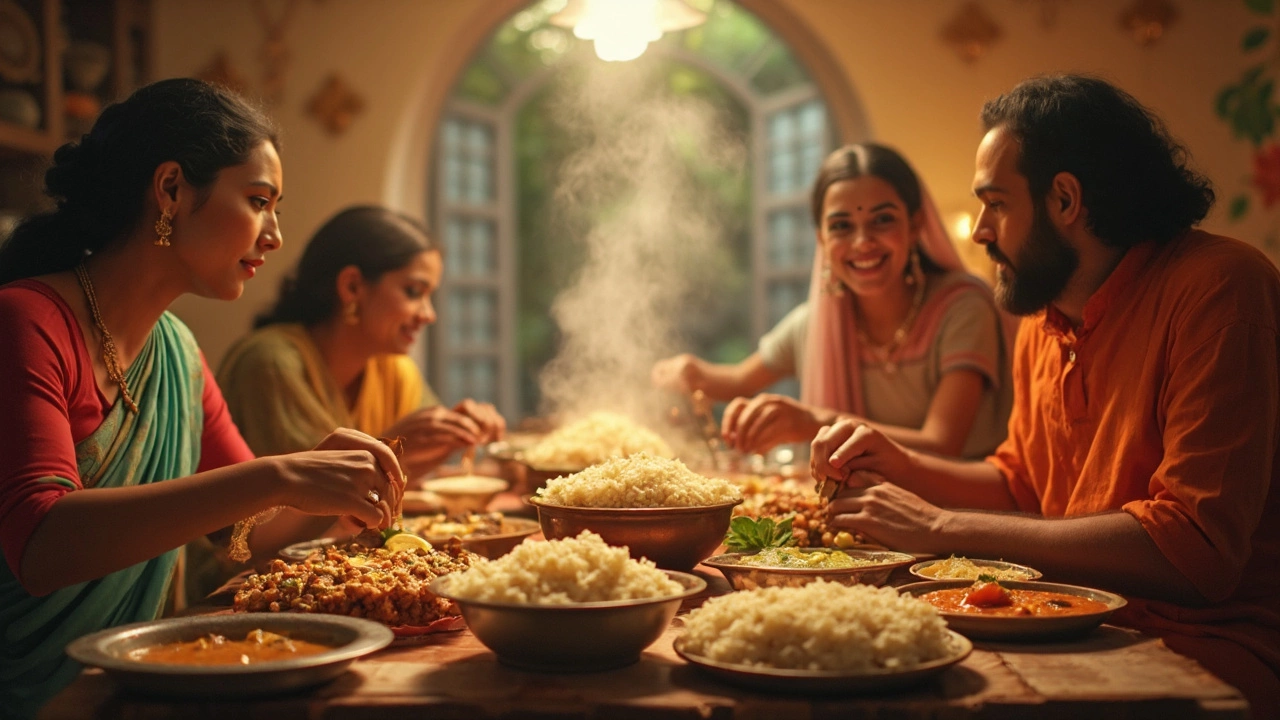
Most Consumed Food in India: Everyday Staples & Popular Recipes
Indian food is all about bold flavors and filling staples, but what tops the list as the most consumed dish? This article dives into India's favorite foods, why they're loved, and how you can bring them to your kitchen with fuss-free recipes. You'll get quick facts, cooking tips, and a peek into what people really eat every day. Perfect for anyone curious about Indian meals or eager to whip up easy home-cooked dishes. Ready for something both tasty and simple? Read on.