Acid Curdling Milk: How It Works and Why It Matters in Indian Cooking
When you add lemon juice or vinegar to hot milk and it turns into solid lumps, that’s acid curdling milk, the chemical process where acid lowers the pH of milk, causing proteins to clump and separate from the liquid. Also known as milk coagulation, this isn’t spoilage—it’s the foundation of paneer, a fresh, non-melting Indian cheese made by curdling milk with acid. It’s how you turn plain milk into something you can grill, fry, or stir into curry.
This same trick works for other dairy staples too. In rural kitchens across India, people use yogurt, buttermilk, or even tamarind juice to curdle milk when they don’t have lemon. The result? Homemade cheese that’s cheaper, fresher, and free of additives. You don’t need fancy equipment—just heat, acid, and patience. The temperature matters: milk should be warm, not boiling, or the curds turn rubbery. Too little acid? Nothing happens. Too much? The curds get gritty. It’s a balance, and once you get it, you’ll never buy store-bought paneer again.
Why does this matter? Because paneer shows up in over 50 popular Indian dishes—from palak paneer to paneer tikka. And if you’ve ever wondered why your homemade paneer won’t hold shape, it’s likely because the acid wasn’t added at the right moment, or the milk was ultra-pasteurized (which resists curdling). Even milk coagulation plays a role in making traditional dahi (yogurt) and chhena, the base for rasgulla and other sweets. This isn’t just cooking—it’s chemistry you can taste.
Below, you’ll find real recipes and fixes from home cooks who’ve cracked the code on acid curdling milk. Whether you’re trying to make paneer for the first time, troubleshooting flat roti from using wrong milk, or wondering why your chicken curry tastes off—chances are, it’s tied back to how the dairy behaved in your pot. No fluff. Just what works.
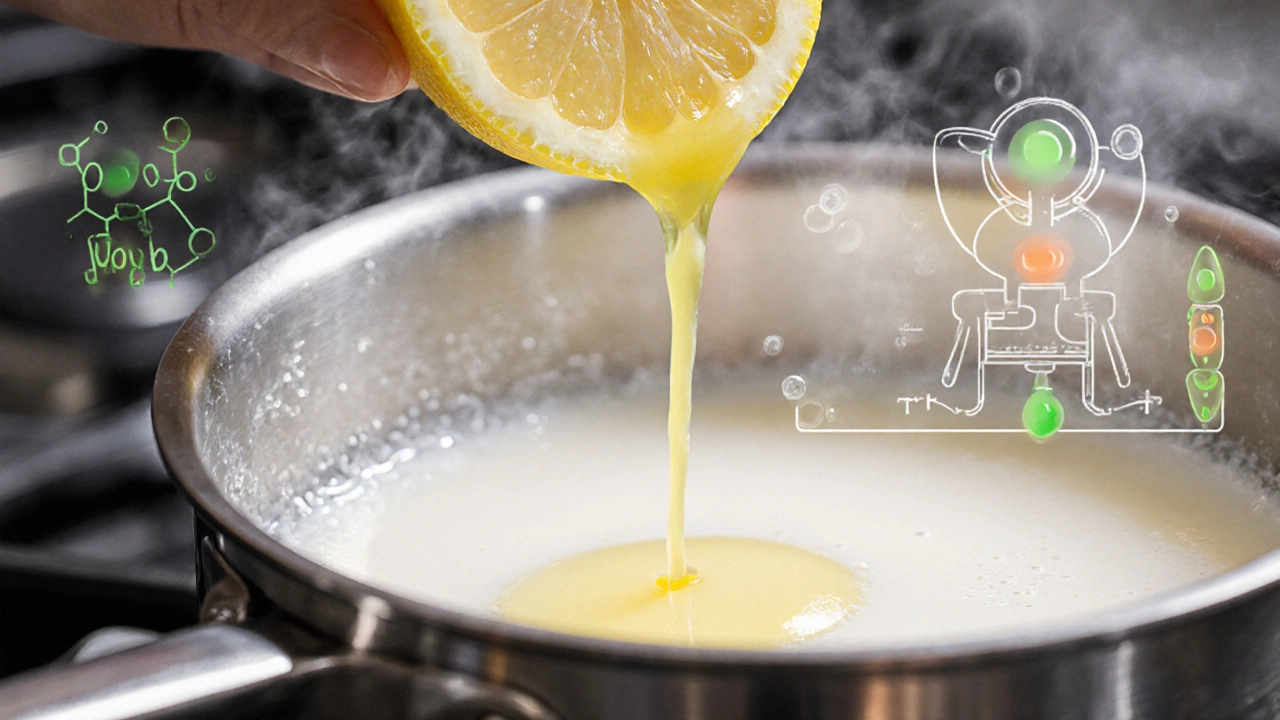
Why Lemon Juice Curds Milk: The Science Behind Homemade Paneer
Learn why lemon juice makes milk curdle, the science behind paneer, step‑by‑step instructions, common pitfalls, and FAQs for perfect homemade cheese.